Share |  

8 October 2014

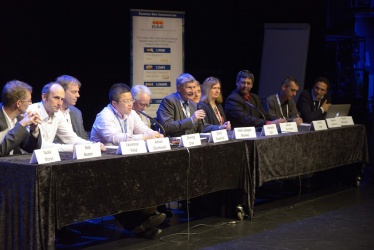
Last month, iSGTW attended the EUDAT Third Conference in Amsterdam, The Netherlands. EUDAT is facilitating efficient research by contributing towards a collaborative data infrastructure in Europe. This will enable researchers to share data easily both within and between communities. It will also facilitate preservation of research data.

"The longer we wait, the more complex it becomes to solve the challenges around building the collaborative data infrastructure," says Kimmo Koski, managing director of Finland’s IT Center for Science (CSC), which is the organization coordinating the EUDAT project. "The time has come to do this now: Today’s global economic situation highlights the need for broad collaboration to solve these challenges."

4.333335


With the aid of supercomputers and biotelemetry, researchers are creating detailed 3D models of land use and movement by endangered wildlife.

Read about the California condor, giant panda, and dugong, and how big data and computational resources are helping to dramatically improving tracking the animals' habitats and movements.

4.333335


Spotlight

You Might Have Missed


Researchers at the Los Alamos National Laboratory used supercomputers to model ocean vortexes and their effect on floating oil rigs. Their work has won industry awards — increasing safety and reducing potential harm to deep sea environments….

3.333335


As iSGTW celebrates its 10th anniversary, Katie Yurkewicz, the publication’s first editor, looks back at the challenges of establishing an e-newsletter to support the fledgling grid-computing community and highlights how the…

4.4


This issue marks the 10th anniversary of iSGTW. We would like to take this opportunity to thank all our readers and all those who have contributed to the publication over the last decade.

4.333335