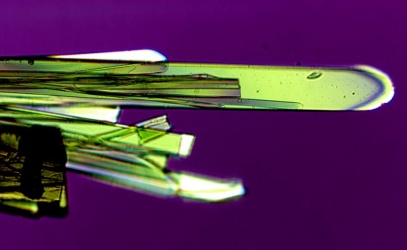

A breakthrough in chemistry promises new computer memory that consumes less power, lasts longer, and captures data faster than current dynamic random-access memory. A new organic material may lead to memory that enables higher performance scientific computing.
This year's Turing Festival had a session called CERN: Big Questions, Big Science, Big Technology. Speakers talked about its history of physics theory, engineering, and computing.
Data from mice that sing combined with powerful high-performance computers may help researchers understand genes related to speech disorders in humans, especially those with autism.
A new and powerful Java security vulnerability has been recently announced that affects Linux, Windows, and Mac operating systems. But, don't worry, help is at hand from a computer security expert.
Researchers at the Los Alamos National Laboratory used supercomputers to model ocean vortexes and their effect on floating oil rigs. Their work has won industry awards — increasing safety and reducing potential harm to deep sea environments....
As iSGTW celebrates its 10th anniversary, Katie Yurkewicz, the publication’s first editor, looks back at the challenges of establishing an e-newsletter to support the fledgling grid-computing community and highlights how the...
This issue marks the 10th anniversary of iSGTW. We would like to take this opportunity to thank all our readers and all those who have contributed to the publication over the last decade.