Share |

2 July 2014

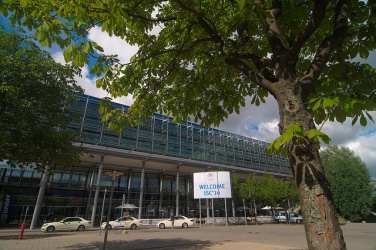
Last week, iSGTW attended the International Supercomputing Conference (ISC’14) in Leipzig, Germany. The event featured a range of speakers representing a wide variety of research domains. Awards given by PRACE and Germany’s Gauss Centre for Supercomputing highlighted some of the outstanding research on show at the event. And, of course, the new TOP500 list of the world’s fastest supercomputers was announced.

3.25

Powerful computational platforms are enabling scientists to identify, analyze, and compare the fundamental biological components and processes that regulate human diseases and their impacts. Traditional evidence-based medicine, where testing and prescription follow personal testimony, is a one-size-fits-all approach that will one day be replaced by predictive, ongoing, numerical statements of health. Advances in modeling and simulation also play a key role in improved patient outcomes. Read about computational medicine and the shifts — from reactive to predictive — taking place in healthcare.

4.333335
Spotlight

You Might Have Missed


Researchers at the Los Alamos National Laboratory used supercomputers to model ocean vortexes and their effect on floating oil rigs. Their work has won industry awards — increasing safety and reducing potential harm to deep sea environments....

3.333335

As iSGTW celebrates its 10th anniversary, Katie Yurkewicz, the publication’s first editor, looks back at the challenges of establishing an e-newsletter to support the fledgling grid-computing community and highlights how the...

4.4

This issue marks the 10th anniversary of iSGTW. We would like to take this opportunity to thank all our readers and all those who have contributed to the publication over the last decade.

4.333335