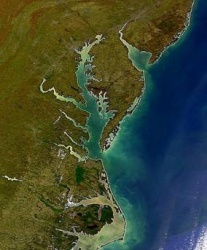

The Computing for Sustainable Water Project has run its course following six months of computation on the World Community Grid. The project has focused on the issues surrounding the quality of water in the Chesapeake Bay area, the largest watershed of the Atlantic seaboard of North America. The researchers behind the project hope to apply the lessons learned here to other watersheds around the world.
The Sequoia supercomputer has simulated the human heart at an unprecedented scale, a breakthrough for the use of computational medicine by doctors to prevent sudden cardiac death.
Researchers have discovered the mechanism of how a dangerous class of carcinogen stabilizes the very DNA it damages. This finding could lead to better preventative medicine and cancer treatment.
The Jim Gray eScience Award 2012 was presented to ChemSpider founder Antony John Williams at last month’s eScience conference in Chicago. ChemSpider is a free online database, containing chemical information on over 26 million molecules.
Researchers at the Los Alamos National Laboratory used supercomputers to model ocean vortexes and their effect on floating oil rigs. Their work has won industry awards — increasing safety and reducing potential harm to deep sea environments....
As iSGTW celebrates its 10th anniversary, Katie Yurkewicz, the publication’s first editor, looks back at the challenges of establishing an e-newsletter to support the fledgling grid-computing community and highlights how the...
This issue marks the 10th anniversary of iSGTW. We would like to take this opportunity to thank all our readers and all those who have contributed to the publication over the last decade.