|
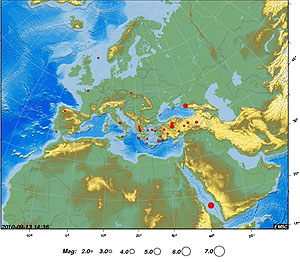
To get a better idea of when the next earthquake will strike in Europe, you need to have a good idea of the region’s structure — which seismologists can get by measuring vibrations in the Earth at hundreds of observatories across the continent, allowing them to study earthquakes as they travel across countries. By measuring the speed and strength of the vibrations at different sites, deductions can be made about the type of ground they travel through.
The problem with earthquakes is that they don’t occur when and where you need them.
Fortunately for researchers, earthquakes aren’t the only things that cause vibrations: road traffic, waves pounding on the beach, and even wind and thunder can also cause detectable vibrations.
Analyzing such things is not without complications, however. You can use noise to analyze the Earth’s structure, but you need to analyze huge amounts of data — and that’s nearly impossible on standard computers.
Enter a new system from a computing team called RAPID.
Read more 
|





 Headlines | Site Map